[wpcol_1half id=”” class=”” style=””] Empower the regions, respect diversity, decongest Imperial Manila.
The 1987 Constitution defines the Philippines as being a unitary state, centralized around the capital of Manila. The result has been that most economic opportunities and opportunities for quality education and self-development are concentrated around the National Capital Region, and leaving the countryside, the provinces, and other cities relatively underdeveloped.
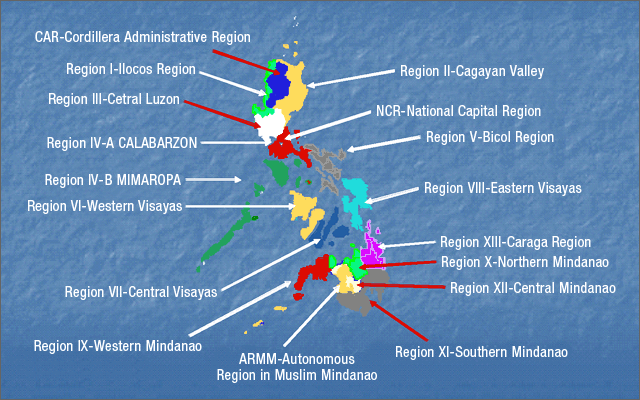
Evolving Federalism by Regions
As such, ordinary Filipinos seeking higher education or better job opportunities are forced to flock to Metropolitan Manila in order to try their luck, unfortunately resulting in the massive population congestion, higher pollution levels, sub-standard living conditions, extreme traffic jams, and high crime rate of Metro Manila. It has also caused the Philippine provinces to have to remit most of their taxes to the capital, and after aggregating the entire amount at the national level, smaller amounts are redistributed back to the local entities, giving them little incentive to develop their own local economies as whatever they produce does not exactly go straight to their own development and instead is mostly remitted back to the capital.
By allowing for evolving region-based decentralization, the different regions in the Philippines will be better empowered to take control of their own economic decision-making, giving them greater incentives to develop their economies, attract their own investors, and create local opportunities that would allow their own people to prosper while staying in their own regions without needing to migrate to the National Capital Region. Empowering the regions this way also respects the cultures, traditions, and languages of the different ethnicities found in the different regions as this devolution of powers will allow the different regions to protect their own local cultural and/or linguistic heritage.
Watch this video [/wpcol_1half]
[wpcol_1half_end id=”” class=”” style=””] [yd_list_posts spec_query=”category_name=Evolving Federalism”]
[/wpcol_1half_end]
Academic Papers & PDFs on Federalism:
The Philosophy and Theories of Federalism
Published in: August 18, 2022
by Gabriel Lanre Adeola (PhD) & Adeleke Olumide Ogunnoiki --- This paper examines the philosophy and theories of federalism from the 17th to the 20th century. For this study, the qualitative method of secondary data collection was adopted. The paper concludes that the philosophy and theories of federalism are tools that assist analysts and readers with the normative and empirical perspectives of federalism, the conditions and preconditions for adopting federalism, the division of power in a federation and the economic functions of the levels of government in a federal state among other things.
Download
The Many Uses of Federalism
Published in: August 18, 2022
by Donald L. Horowitz --- In this article, the aim is to discuss some unexplored frontiers of federalism. By opening a window on comparative federalism and ethnic conflict in severely divided societies, it is possible to show that federalism can often be an aid to the reduction of conflict or to its pursuit in democratic ways. Depending on the configuration of federal institutions, federalism can also foster undemocratic institutions. There are, therefore, two main points to be made: federalism has utility in deeply divided societies, but to realize its many benefits, it is necessary to get the federal design right.
Download
Comparing Federal Systems in the 1990s
Published in: August 18, 2022
by the late Dr. Ronald L. Watts --- In this paper, Professor Watts draws on his unique breadth of knowledge of federal systems. He explores the complexities of federations in advanced industrial nations such as the United States, Switzerland, Australia, Austria, and Germany, multilingual federations such as India and Malaysia, emerging federations such as Belgium and Spain, and federations that have failed such as Czechoslovakia and Pakistan.
Download
New Protectionism: Still Protectionism and Bad Economics
Published in: December 20, 2020
by Veronique de Rugy --- Historically, tariffs have not helped economic growth. Whether one considers the United States before World War I, the countries of the “East Asian miracle” in the middle of the 20th century, or China after that, freer markets and lower barriers to trade were key in promoting economic growth and reducing poverty.
Download
The Federal Solution to Ethnic Conflicts
Published in: December 16, 2020
by Baogang He --- Conflicts over ethnic homeland rule, the right to territorial autonomy, and even nation-statehood have been played out in Asia, where it has been debated whether federalism is the best system to reduce or contain ethnic conflicts. The international community has questioned whether the multinational federalism of Spain and Canada offers a successful model for Asia. It has also questioned whether underlying norms such as the right to territorial autonomy, the right to self-determination, and the right to remain unassimilated are universally acceptable.
Download
Who does better for the Economy? Presidents vs Parliamentary Democracies
Published in: December 16, 2020
by Richard McManus & F. Gulcin Ozkan --- Are certain forms of government associated with superior economic outcomes? This paper attempts to answer that question by examining how government systems influence macroeconomic performance. We find that presidential regimes consistently are associated with less favorable outcomes than parliamentary regimes: slower output growth, higher and more volatile inflation and greater income inequality.
Download
The Personal Vote and Economic Reform
Published in: December 16, 2020
by Tanya Bagashka --- In the post-communist and many developing countries, the transition to democracy occurred in tandem with radical economic reform or transition from a centrally planned to a market economy. The simultaneous transition begs the questions: Why have some new democracies implemented reforms more quickly and successfully than others? Has the choice of political institutions affected the progress of economic reform? Here we focus on the effects of electoral rules. Electoral systems affect two dimensions of political competition: inter-party and intra-party, both of which have implications for the success of economic reform.
Download
Contemporary Democracy in a Parliamentary System
Published in: July 4, 2020
by Kazuyuki Takahashi --- A change of government has two implications for the quality of democracy. First, a change of government confirms the existence of democracy. There is no better proof that democracy exists than the fact that a change of government takes place following a free popular election. Second, popular belief in the possibility of a change of government, supported and strengthened by actual experience, enables the people to make a real choice. Where there is no significant chance of altering government, elections lose their meaning. The people are forced either to accept the existing government or embrace uncertainty by rejecting it.
Download
The Differing Federalisms of Canada and the United States
Published in: June 28, 2020
by Martha A. Field --- There are some remarkable differences in the ways that Canada and the United States have structured their federalisms - differences that teach us not only about the two systems involved but also about the possibilities of federalism generally. The aim of this article is to provide an overview of this subject for the reader who is new to it. It will compare the role of the provinces and the role of the states in the federal schemes of Canada and the United States and will survey three main subjects.
Download
Federalism: the Best Future for Scotland
Published in: June 28, 2020
by the Home Rule & Community Rule Commission of the Scottish Liberal Democrats --- The Home Rule and Community Rule Commission was tasked with setting out proposals
to bring about substantial and stable home rule powers for Scotland. This report does that, and shows how these powers and responsibilities would be best achieved by a move to a federal system across the whole of the United Kingdom. This report builds on the understanding developed by the Steel Commission report and from a century of Liberal and Liberal Democrat campaigning for home rule.
Download
The Advantages of Parliament beyond the Perils of Presidentialism
Published in: June 23, 2020
by François de Soete --- This article argues that the parliamentary model's institutional features are better-suited than those of the presidential model for achieving what is here termed indirect deliberative democracy. In the end, showing that a parliament can more closely approximate a deliberative environment in comparison with a presidential system can in itself serve as a step toward actualizing indirect deliberative democracy.
Download
Latin American Presidencies Interrupted
Published in: June 23, 2020
by Arturo Valenzuela --- While the case for adopting parliamentarism might seem compelling to political scientists, the idea of such a shift is plainly anathema to most Latin American citizens. The overwhelming symbolic authority attributed to presidentialism leaps out from the pages of the region’s history and bestrides its politics like a colossus. Even if successful democratic presidents have been few and far between, there have been enough legends such as Mexico’s Benito Juárez (1861–63, 1867–72) to keep Latin America the continent of presidentialism par excellence. Brazil, which is unique in the region for having remained officially a monarchy from the time of its independence in 1822 until 1889, decisively defeated a 1993 referendum on shifting to parliamentarism.
Download
Political Dynasties & the Incumbency Advantage in Party-Centered Environments
Published in: June 20, 2020
by Jon Fiva & Daniel Smith --- Compared to the larger and statistically significant effects that have been estimated in candidate-centered contexts like the U.S. (6 percentage points) and the Philippines (12 percentage points), our null finding from Norway suggests that incumbency plays a smaller explanatory role in the mechanisms underlying dynastic politics in countries with strong party organizations and party-centered voting, in line with the comparative theory laid out by Smith (2012).
Download
The Politics of Semi-Presidentialism
Published in: June 20, 2020
by Robert Elgie --- This chapter provides an introduction to the concept of semi-presidentialism and establishes a framework for the study of the politics of semi-presidential regimes. In the first part of the chapter, the evolution of the concept of semi-presidentialism will be sketched, some of the main criticisms of the concept will be considered, a slight reformulation of the standard definition of the term will be proposed, and a list of semi-presidential regimes will be identified.
Download
Political Dynasties & Party Strength: Evidence from Victorian Britain
Published in: June 19, 2020
by Carlos Velasco Rivera --- In the context of Victorian Britain, political dynasties represented a form of a traditional elite. The findings in the paper, therefore, show the development of parties is key to bringing about their demise. The findings in the paper also have implications for our understanding of the development of political parties and the persistence of political dynasties in democracies. Together, the results suggest dynasties persist and survive electoral reforms (Querubin, 2011) as long as parties fail to become institutionalized.
Download
Political Dynasties in the UK House of Commons: The Null Effect of Narrow Electoral Selection
Published in: June 18, 2020
by Brenda van Coppenolle --- Does power persist within families? This article considers whether members of the UK House of Commons with longer legislative careers after 1832 were more likely to establish a political dynasty. Tenure can create opportunities to promote relatives. A regression discontinuity design for re-election races helps to rule out the confounding influence of inheritable traits. There is no evidence for a causal effect of tenure length on establishing or continuing a dynasty. Established families may have constrained further dynasty development, explaining the null result of tenure.
Download
The Limits of the Parliamentary Critique of the Separation of Powers
Published in: June 18, 2020
by Thomas Sargentich --- The CoRRECT™ Movement generally disagrees with the stand of the late author. Despite the evidence being extremely abundant that the Parliamentary System is far superior to the Presidential System, this paper from 1993 attempts to reject such overwhelming evidence. Sadly, Prof. Sargentlich died in 2005 and was not able to see the piling up of more evidence of the failure of the presidential system and the dysfunctions of its numerous shutdowns and instances of gridlock in the USA. That said, this paper is included here because it includes a lot of good information about the history of the pro-Parliamentary movement in the USA. Had he lived to see how the system works today, it is likely that he would become an advocate of shifting the USA to the Parliamentary System.
Download
Economic Policy: Thoughts for Today & Tomorrow
Published in: June 17, 2020
by Ludwig von Mises --- Ideally government should be a sort of caretaker, not of the people themselves, but of the conditions which will allow individuals, producers, traders, workers, entrepreneurs, savers, and consumers to pursue their own goals in peace. If government does that, and no more, the people will be able to provide for themselves much better than the government possibly could. This in essence is the message of Professor Ludwig von Mises in this small volume.
Download
Rationale & Features of Federalism
Published in: June 16, 2020
by Julio Teehankee --- The Philippine archipelago has long been burdened by an overconcentration of political and administrative powers in Manila, which prevents full support and services from benefitting the farthest reaches of the country. Moreover, the unitary state has stunted growth and development in the different regions. There have been several incremental and piecemeal attempts to decentralize the unitary state. Despite the long experimentation with decentralization, Metro Manila, CALABARZON (Region IV-A) and Central Luzon (Region III) account for 62 percent of GDP, while fourteen out of seventeen regions account for only 38 percent.
Download
Federalism (International IDEA Constitution-building Primer)
Published in: June 16, 2020
by Elliot Bulmer --- Federalism is a system of government that establishes a constitutionally specified division of powers between different levels of government. There are usually two main levels: (a) a national, central or federal level; and (b) a state, provincial or regional level. In some cases, however, a federal system may prescribe a three-fold distribution of power by recognizing the constitutional powers of local government (e.g. South Africa) or by creating complex forms of overlapping territorial and linguistic federalism (e.g. Belgium).
Download
Ostrom, Hardin & the Commons: A Critical Appreciation & a Revisionist View
Published in: June 16, 2020
by Eduardo Araral --- I provide a critical appreciation of the considerable legacies of Ostrom and Hardin to the literature on the commons. First, how valid is Ostrom’s critique of Hardin’s tragedy of the commons? Second, how generalizable is Ostrom’s institutional design principles for long-lived commons? Finally, how justified is Ostrom’s critique of privatization, markets and the Leviathan solutions to the tragedy of the commons? Based on a reassessment of the evidence and reinterpretation of Ostrom’s work supplemented by field work, my preliminary findings suggest that, first, her critique of Hardin is valid in the special case of smallscale, locally governed commons while Hardin seem justified for large scale, national, regional and global commons.
Download
Parliamentarism, Freedom from Corruption, FDI, & Per Capita PPP: The Causal Nexus
Published in: June 16, 2020
by Eduardo Alicias, Jr. --- This study examines the hypothesized causal nexus involving the parliamentary system of government, freedom from corruption, foreign direct investment (FDI), and per capita purchasing power parity (the dependent variable). It is theorized that the parliamentary system of government brings about greater freedom from corruption; and which in turn, directly and/or indirectly brings about greater per capita purchasing power parity (per capita PPP)— isolating the extraneous effects of a set of control variables.
Download
Systems of Government: Parliamentarism & Presidentialism
Published in: June 16, 2020
by José Antonio Cheibub --- With the exception of the United States, where a system of separation of executive and legislative powers exists, all countries that are considered to be stable democracies adopt a constitution that is, at least partially, parliamentary. A parliamentary constitution is characterized by the fusion of executive and legislative powers, achieved by the fact that the government needs the confidence of a majority in the legislative assembly in order to come to and remain in power.
Download
The Economic Effects of Federalism & Decentralization: A Cross-Country Assessment
Published in: June 16, 2020
by Stefan Voigt & Lorenz Blume --- This paper is based on the conjecture that institutional details matter and that attempts to estimate the economic effects of federalism by drawing on a simple dummy variable neglect potentially important institutional details. Based on a principal component analysis, seven aspects of both federalism and decentralization are used as variables for explaining differences in (1) fiscal policy, (2) government effectiveness, (3) economic productivity, and (4) happiness. The results show that institutional details do, indeed, matter. Different aspects of federalism impact on the outcome variables in different degrees. This study adds to our knowledge on the transmission mechanisms of federalism and decentralization.
Download
Constitutional Frameworks & Democratic Consolidation: Parliamentarism versus Presidentialism
Published in: June 16, 2020
by Alfred Stepan & Cindy Skach --- We believe we are now in a position to say that the explanation of why parliamentarianism is a more supportive constitutional framework lies in the following theoretically predictable and empirically observable tendencies: its greater propensity for governments to have majorities to implement their programs; its greater ability to rule in a multiparty setting; its lower propensity for executives to rule at the edge of the constitution and its greater facility at removing a chief executive who does so; its lower susceptibility to military coup; and its greater tendency to provide long party-government careers, which add loyalty and experience to political society.
Download
Parliamentary Privilege? Kinship in Canada's Parliament
Published in: June 16, 2020
by Matthew Godwin --- The Canadian House of Commons since Confederation has seen a steady, nearly uninterrupted decline in kinship. Population growth does not explain this process and neither do electoral upheavals. However, changes to Canada’s electoral laws and the expansion of suffrage have created opportunities for new entrants. Finally, the diminishment of parliamentary pork-barrelling in the early twentieth century also limited the capacity for families to secure a multi-generational presence in parliament.
Download
Political Reform & Elite Persistence: Term Limits & Political Dynasties in the Philippines
Published in: June 16, 2020
by Pablo Querubín --- In this paper I study the extent to which the introduction of term limits by the 1987 Philippine Constitution effectively broke the hold of incumbent families on power. The ability of term limits to dismantle political dynasties is not obvious, as term-limited incumbents may be replaced by relatives or may run for a different elected office. Whether these strategies undermine the direct effects of term-limits in reducing the time an individual can hold office is an empirical question. I find no evidence of a statistically significant impact of term limits on curbing families’ persistence in power. Challengers prefer to wait for the incumbent to be termed-out and run in an open-seat race. As a consequence, incumbents are safer in their early terms prior to the limit.
Download
Decentralization and Economic Development: The Philippine Experience
Published in: June 16, 2020
by Milwida M. Guevara --- The Philippines embarked on an ambitious decentralization program in 1991 to strengthen democratic processes and enhance economic growth. The national government devolved major responsibilities and revenues to local governments. Decentralization however goes beyond the transfer of responsibilities and revenues to local governments. Decentralization however goes beyond the transfer of responsibilities and resources to local governments.
Download
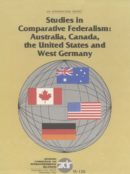
Studies in Comparative Federalism: Australia, Canada, the USA, & West Germany
Published in: June 16, 2020
by the Advisory Commission on Intergovernmental Relations (1981) --- In the State and Local Fiscal Assistance Amendments of 1976 (P.L. 94-488), Congress asked the Advisory Commission on Intergovernmental Relations to study and evaluate "the allocation and coordination of taxing and spending authority between levels of government, including a comparison of other federal government systems." The objective of this research is to determine how federal systems in other industrialized nations have dealt with some of the issues of fiscal federalism that are of current concern in the United States.
Download
The Efficient Secret: How the US nearly adopted a Parliamentary System & why it should have done so
Published in: June 16, 2020
by Frank H. Buckley --- The American presidential system, with its separation of powers, plausibly imposes enormous costs on the economy without compensating gains, as seen in the current gridlock over the debt crisis. Modern parliamentary systems of government, such as those in Britain and Canada, seem to handle such problems more efficiently. Regretfully, however, the principle of separationism has been extended in Supreme Court decisions and in the Senate filibuster, in part because of the mistaken idea that this is what the Founders intended.
Download
Chicken or the Egg: Culture Change or System Change?
Published in: June 16, 2020
by Orion Pérez Dumdum (2012) --- People often wonder about what determines the success of a society. Is it the culture or is it the system? Quite recently, as the debate on Constitutional Reform progresses and as more and more people realize that the current Philippine System – both economic and political – is dysfunctional and flawed, one opposing view that keeps coming up insists that it is not the system that needs changing, but the culture. While I am an advocate of Constitutional Reform and System Shifting, I have also long since proclaimed the fact that Filipino Culture is deeply dysfunctional, flawed, and needs a major overhaul. The question is: How do we overhaul Filipino Culture?
Download
Japanese Theory of Modernization/Industrialization: Between Liberalism & Developmentalism
Published in: June 15, 2020
by Kiichiro Yagi --- After a decade of economic stagnation, it is now in vogue among economists to say that the economic system of Japan suffers from an “institutional fatigue”. This expression, however, connotes that the unique institutional arrangement of Japanese economy had once an age when it functioned well. The precise diagnosis and prescript against this “fatigue” differs in each case, particularly by the range of the time that the observer adopts.
Download
Japanese Economic Development & Education
Published in: June 15, 2020
by Nisaka Yoshinobu --- 140 years ago, Japan embraced the Meiji Restoration. Japan’s isolation policy ended. Japan opened its doors to the world. The social class system was terminated and equal rights were given to each individual. The Western system was introduced and initiated a major revolution which changed the country dramatically. Due to this dramatic change, the positive energy of the entire nation was released and within several decades, Japan had become one of the world’s super powers.
Download
The Philippine Economy: Development, Policies, and Challenges
Published in: June 15, 2020
by Arsenio Balisacan & Hal Hill --- The Philippines is one of the world's major development puzzles. In the immediate aftermath of the Pacific war, and despite extensive wartime destruction, it had one of the highest per capita incomes in East Asia: above South Korea and Taiwan, significantly higher than Thailand, Indonesia and China, and below only Japan, the then Malaya, and the city states of Hong Kong and Singapore. Among newly independent countries, its initial conditions were favorable. American rule from 1898 had been comparatively benign by colonial standards.
Download
Comparative European Party Systems: An Analysis of Parliamentary Elections Since 1945
Published in: June 15, 2020
by Alan Siaroff --- This work seeks to be a comprehensive analysis of European party systems. In terms of what and where Europe is, however, debate persists. Geographers would tend to define it broadly, up to the Ural Mountains at the start of Siberia. In contrast, historically such areas as Russia and Spain have at times not been included (Wallace 1990). In the current context one may be tempted to begin with the European Union; however, this only contains 28 members (including still in 2018 the United Kingdom pending its ‘Brexit’). A better place to start is in fact with the Strasbourgbased Council of Europe.
Download
Legal and constitutional disputes and the Philippine Constitution
Published in: June 15, 2020
by Gerardo Sicat --- The starting point of this essay is the observation that many rulings of the courts of law in the country affect the economy, some of them slowing down the nation’s economic performance thereby causing loss of economic welfare for many citizens. Since all decisions are based in the law, there is need to understand what types of law lead to these interpretations.
Download
Presidents, Assemblies and Policy-making in Asia
Published in: June 15, 2020
Edited by Yuko Kasuya --- This book is concerned with executive–legislative relations in the presidential and semi-presidential democracies of Asia. Since around the mid-1980s, comparative politics scholars have advanced our understanding of differences in executive–legislative relations and their impact on many aspects of political life. These impacts include regime stability, the quality of governance, policy-making processes, formation of parties and party systems, ethnic conflict, and even the international actions of the states.1 These consequences have been analysed with a focus on differences in the two basic forms of executive–legislative relations – that is, (semi-) presidential versus parliamentary government – as well as with a focus on executive–legislative relations within one form of government
Download
Reform of the Economic Provisions of the Constitution: Why National Progress is at Stake
Published in: June 15, 2020
by Gerardo Sicat --- The Philippine Constitution contains many strong restrictions targeted against the flow of foreign capital in specific areas of economic activities. These restrictions were the same ones that were incorporated into the nationalistic provisions of the 1935 Constitution when its framers were anticipating future political independence. This paper discusses the beneficial aspects of lifting or liberalizing these restrictions on foreign capital in the Philippine context.
Download
Constitutional Design: Options for Decentralizing Power
Published in: June 15, 2020
by Cheryl Saunders --- The functions of government that a state performs can be decentralized in various ways and to varying degrees. This Paper is divided into 3 parts, which together are intended to guide the reader in understanding the key building blocks involved in building a decentralized state and identifying the key design issues involved. The paper identifies 3 common models of decentralisation, using country case studies to explain the key design features of each model.
Download
Does Dynastic Prohibition Improve Democracy?
Published in: June 15, 2020
by Jan Frederick Cruz & Ronald Mendoza --- The CoRRECT™ Movement generally disagrees with this paper's assertion that anti-dynasty provisions are necessary. Historical evidence proves that whether we like it or not, dynasties and aristocrats are a natural social tendency. The issue should not be about dynasties per se but on ensuring that the politicians and leaders who do emerge are of high quality, high competence, and are sincerely dedicated to improving their communities and the country. No one likes bad dynasties. But people will gladly support dynasties they consider to be good. The important thing therefore, rather than creating band-aid solutions, is to come up with systems that will ensure that we have quality competent politicians emerging, regardless of their backgrounds. That said, we have included this paper here so that others may read and critique it and see where the logical and/or factual gaps are. There are also valuable tidbits of information that are useful which we agree with, despite the paper's recommendations with which we don't agree.
Download
Land Policy after Land Reform in Japan
Published in: June 13, 2020
by Masaru Kajita --- Almost fifteen years have passed since the Land Reform was completed in July, 1950. During this period, Japan has staged an economic recovery, and is now enjoying a period of so-called "High-Rate Growth." This rapid economic progress rendered inadequate the land policy of just after the Land Reform. The development of agricultural productivity after the Land Reform has also called for a revaluation of land policy
Download
Graft and Corruption: The Philippine Experience
Published in: June 13, 2020
by Nelson Nogot Moratalla --- This paper will present a condensed report on graft and corruption in the Philippines. Information was compiled by the author from documents, articles, newspaper clippings and other data gathered from the reports and journals of the Ombudsman and the Sandiganbayan, two of the constitutional bodies mandated by Philippine law to investigate and act on complaints filed against public officials and employees for violations of graft and corrupt practices.
Download
Competitive Advantage of Nations
Published in: June 13, 2020
In The Competitive Advantage of Nations (1990), I undertook to explain the sources of sustained prosperity in the modern global economy. While the book is set at the level of the nation, the same framework can and has been readily applied at the regional, state, and city level. While most thinking and policy had focused on the macroeconomic conditions for growth and prosperity, my focus was on the microeconomic foundations. While government was the central actor in most literature, I sought to highlight the role played by companies.
Download
Eradicating Corruption - The Singapore Experience
Published in: June 13, 2020
by Muhammad Ali --- I am very honoured to represent Singapore at this prestigious seminar. My paper is on “Eradicating Corruption - The Singapore Experience” and I hope to share with you our experiences in fighting corruption, which has made Singapore one of the cleanest, corruption free countries in the world. In Singapore we have a very strong anti-corruption policy which recognises that corruption control
Download
Inequality, Political Systems, and Public Spending
Published in: June 13, 2020
by Filippo Gregorini & Enrico Longoni --- The aim of this paper is to check for the existence of a link between political institutions, income inequality and public spending. We develop an empirical investigation, based on panel data analysis, on the determinants of public spending focusing on political, economic, demographic and social variables in large sample of developed and developing countries from 1970 to 2005.
Download
The Election & Presidency of Joseph Ejercito Estrada
Published in: June 13, 2020
by Bastiaan van de Loo --- "In the Philippines it is a known fact that patrons are needed in everything, from the time one is baptized until one dies, to obtain justice, secure a passport or exploit whatever industry." This is what national hero Jose Rizal wrote in 1889 about his beloved home country, the Philippines.
Download
Federalism, Decentralisation, and Corruption
Published in: June 13, 2020
by Sebastian Freille, Mohammed Emran ul Haque, & Richard Anthony Kneller --- We investigate the empirical relationship between decentralisation and corruption. Using a newly assembled dataset containing data for up to 174 countries, we revisit the empirical evidence and seek to explain some of the inconsistent results that exist in the literature. We find that not only results differ due to the use of different specifications and data but more importantly because previous research overlooks the relationship between different dimensions of decentralisation.
Download
The People's Draft: Executive Summary
Published in: June 13, 2020
The People’s Draft is a crowd-sourced constitution framed in 2018 at the initiative of Tanggulang Demokrasya (Tan Dem), Inc.ii and PUBLiCUS Asia, Inc. The main features of the Peoples’ Draft are as follows: (1) “Foreign investment liberalization” (for massive job creation and consumer price reduction); (2) “Collective rule” by a unicameral parliament and the local councils (for platform-based party politics, instead of personality-based politics); (3) “Regional decentralization” via the “bottom-up” approach, instead of the “top-down” approach (to empower the people of the regions).
Download
Why Asia's Oldest Democracy is Bound to Fail
Published in: June 13, 2020
by Salvador Santino Regilme, Jr. --- Despite having the earliest exposure to electoral democratic practices in the AsiaPacific region, the Philippines remains to be one of the least stable democracies in the Global South. Notwithstanding the return of electoral democracy in 1986 after two decades of authoritarian rule, the Philippine state has yet to consolidate its democratic regime.
Download
A Positive Effect of Political Dynasties: The Case of France's 1940 Enabling Act
Published in: June 13, 2020
by Jean Lacroix, Pierre-Guillaume Méon, & Kim Oosterlinck --- The literature on political dynasties in democracies usually considers dynasties as a homogenous group and points out their negative effects. By contrast, we argue that political dynasties may differ according to their origin and that democratic dynasties - dynasties whose founder was a defender of democratic ideals - show a stronger support for democracy than other dynasties
Download
The Effect of Political Dynasties on Economic Development
Published in: June 13, 2020
by Siddharth Eapen George --- This paper studies how dynastic politics affects economic development in India, using variation from three distinct natural experiments. We build a political agency model with overlapping generations to show that dynastic politics has theoretically ambiguous economic effects: bequest motives may lengthen politicians’ time horizons (founder effects), but heritable political capital makes elections less effective at holding dynastic heirs accountable (descendant effects). We compile data on the family ties of all Indian legislators since 1947, and present three empirical findings.
Download
Interaction of Powers in the Philippine Presidential System
Published in: June 13, 2020
by Takeshi Kawanaka --- The executive – legislative relations in the Philippines have been described in two contrasting stories, namely the “strong president” story, and the “strong congress” story. This paper tries to consolidate the existing arguments and propose a new perspective focusing on the “compromise exchange” between the president and the congress across the different policy areas. It considers that the policy outcome is not brought by unilateral power of the president or the congress, but formed as the product of such an exchange.
Download
Personalized Foreign Policy Decision-making & Economic Dependence: A Comparative Study of Thailand & the Phils' China Policies
Published in: June 13, 2020
by Wen Zha --- The existing literature on foreign policy fomulation suggests that individual leaders in small and politically unstable states exert a disproportionate impact on foreign policy-making. Some analysts further contend that personalized foreign policy decision-making is more likely to suffer from discontinuities. This article, however, argues that the foreign policies of small and politically unstable states exhibit considerable variation in terms of constancy.
Download
Illiberal Democracy in the Third World: An Empirical Enquiry
Published in: June 13, 2020
by Jan Engberg and Svante Ersson --- The purpose of this paper is to analyse the occurrence and performance of illiberal democracies in the Third World. We are predominately interested in finding out if illiberal regimes are distinctive empirical categories in a comparison with other regime types, and to what extent illiberal democracy might develop into a role model for Third World countries. Our results indicate that illiberal democracies are a growing phenomena and that they are relatively stable over time. However, illiberal democracy becomes an interesting feature only after making a conceptual distinction between illiberalism by design and illiberalism by default.
Download
Assessing Democratic Evolution in Southeast Asia
Published in: June 13, 2020
by Hadar N. Gumay, Shamsul A.B., Temario C. Rivera, & Kullada Kesboonchoo Mead --- This is a collection of speeches at the Trends in Southeast Asia panel seminar and discussion held at the Institute of Southeast Asian Studies, Singapore in 2002. Hadar N. Gumay is the Deputy Director of the Centre for Electoral Reform (CETRO), Shamsul A. B. is Professor of Social Anthropology and Director, Institute of the Malay World and Civilization (ATMA), Universiti Kebangsaan Malaysia, Bangi, Malaysia. Temario C. Rivera is Professor of International Relations at the International Christian University, Tokyo. He was professor and former chair of the Department of Political Science at the University of the Philippines and the editor of the Philippine Political Science Journal. Kullada Kesboonchoo Mead teaches in the Department of International Relations, Chulalongkorn University, Bangkok.
Download
Problems of Democracy in Ethnically-Divided South Asian Countries
Published in: June 13, 2020
by Tatu Vanhanen --- Ethnic heterogeneity characterizes all South Asian countries. Their populations are divided by language, religion, caste, race, and/or tribe into various groups, which are tended to compete and clash with each other. Consequently, ethnic conflicts in one form or other have been common in all these countries, and it has been difficult to maintain domestic peace.
Download
Incentives & Human Resource Management in the Design of Public Sector Reform
Published in: June 13, 2020
by Nadeem ul Haque --- We, in Pakistan, should be very happy that the global development community has finally accepted the centrality of public sector reform (also known as improved governance) in the quest for improved living standards in poor countries. Development economics is a subject that is based on the interpretation and observation of some Western academics and Western donor-based agencies.
Download
Much Ado about Nothing? - Clan Politics & Term Limits in the Philippines
Published in: June 13, 2020
by Yuko Kasuya --- The Philippines is one of the few countries in the world that prohibit unlimited re-election of national-level legislators. Aside from the Philippines, Costa Rica and Mexico are the only two other such cases. At the sub-national level, 22 states in the United States introduced term limits on their legislators. The term-limit rule in the Philippines was instituted in the 1987 Constitution, which was ratified after the 1986 democratization. Under the current rule, House of Representatives members can only serve up to three consecutive terms, or 9 years. For Senators, they can serve up to two consecutive terms or 12 years.
Download
Presidential Term Limits & Party System Stability in New Democracies
Published in: June 13, 2020
by Yuko Kasuya --- This paper examines the relationship between party-system instability and presidential term limits. I argue that among new democracies, a single-term limit on the presidency is more prone to destabilize the legislative-level party system than a multiple-term limit. Whether or not presidents are banned from immediate re-election affects the presence or absence of the incumbent in presidential elections, which is the driving force behind this conjecture.
Download
Electoral Rules & Government Spending in Parliamentary Democracies
Published in: June 13, 2020
by Torsten Persson, Gerard Roland, & Guido Tabellini --- We present a theoretical model of a parliamentary democracy where electoral competition inside coalition governments induces higher spending than under single party governments. Policy preferences of parties are endogenous and derived from opportunistic reelection motives. The electoral rule affects government spending, but only indrectly: proportional elections induce a more fragmented party system and a larger incidence of coalition governments than do majoritarian elections.
Download
From Linz to Tsebelis: Three Waves of Presidential/Parliamentary Studies?
Published in: June 13, 2020
by Robert Elgie --- The debate about the relative merits of presidentialism and parliamentarism has a long history, but it was revived in 1990 with Juan Linz’s articles about the supposed perils of presidentialism and the virtues of parliamentarism. The argument presented in this review is that we are now witnessing a ‘third wave’ of presidential/parliamentary studies since 1990. The ‘first wave’ began with Linz’s articles. . It was characterised by a debate in which there was one explanatory variable (the regime type) and one dependent variable (the success of democratic consolidation).
Download
Democratic Deficits in the Philippines: What is to be Done?
Published in: June 13, 2020
by Clarita Carlos & Dennis Lalata with Dianne Despi & Portia Carlos --- There is no doubt that the importance of a good person, with the right intentions and with character, imbued in the highest office of the country, cannot be overestimated. With the extraordinary powers the 1987 Philippine Constitution bestowed upon the President, he will be able to change things and move the country forward – even with the limitation of only one six-year term in office. However, the example of the Ramos Administration in the ninetees, during which democracy seemed to have stabilized and a fresh wind of socioeconomic development pushed the country for some years into the mainstream of the booming SoutheastAsian region bears remembering how the country can fall back into political turmoil and socio-economic deadlock after a change of administration.
Download
The English Constitution
Published in: June 13, 2020
by Walter Bagehot --- (pronounced as "Badge-yeot") There is a great difficulty in the way of a writer who attempts to sketch a living Constitution, — a Constitution that is in actual work and power. The difficulty is that the object is in constant change. An historical writer does not feel this difficulty: he deals only with the past; he can say definitely, the Constitution worked in such and such a manner in the year at which he begins, and in a manner in such and such respects different in the year at which he ends; he begins with a definite point of time and ends with one also. But a contemporary writer who tries to paint what is before him is puzzled and perplexed; what he sees is changing daily.
Download
Should the Philippines Turn Parliamentary?
Published in: June 13, 2020
by Florencio Abad --- It is unfortunate that enlightened debate about the proposed shift in the form of government has been hampered by allegations of hidden motives by Senate leaders and by a public suspicious of an unspoken agenda of certain politicians. The senators fear that the proposal is a means to cut short their political careers. The public, in turn, suspects that the plan has been advanced to secure the political futures of those who hold higher political ambitions, as well as to prolong the careers of those affected by the term limits set by the Constitution. These reservations are not baseless nor unfair, given the embarrassing way patronage, narrow and self-interested politics have dominated the political way of life of the country
Download
The Perils of Presidentialism
Published in: June 13, 2020
by Juan Linz --- As more of the world’s nations turn to democracy, interest in alternative constitutional forms and arrangements has expanded well beyond academic circles. In countries as dissimilar as Chile, South Korea, Brazil, Turkey, and Argentina, policymakers and constitutional experts have vigorously debated the relative merits of different types of democratic regimes. Some countries, like Sri Lanka, have switched from parliamentary to presidential constitutions. On the other hand. Latin Americans in particular have found themselves greatly impressed by the successful transition from authoritarianism to democracy that occurred in the 1970s in Spain, a transition to which the parliamentary form of government chosen by that country greatly contributed.
Download
The Shift to Parliamentary System: Changing the terrain for PO-NGO Intervention
Published in: June 13, 2020
by Mr. Earl Parreño --- Every political system is at once unique and different from all others and is in Flux. The Philippine political system is no exception. While it is a creation of colonialism (Its first operational constitution an imitation of the American charter), it has undergone the subtle process of evolution, constantly modifying the political environment. In this process, new political actors in both local and national politics have emerged. The progressive POs/NGOs today have definitely emerged as important actors in the present political arena. T
Download
Presidential versus Parliamentary Government
Published in: June 13, 2020
by John Carrey --- The last twenty-five years have witnessed dramatic growth in the number of political regimes that meet basic standards of procedural democracy, such as freedom of association and expression, competitive elections that determine who holds political power, and systematic constraints on the exercise of authority. What has been called the "third wave of democracy" is deiven by the confluence of various trends -- the establishment of democracy in countries with no prior democratic experience...
Download
Democracy: Presidential or Parliamentary - Does it Make a Difference?
Published in: June 13, 2020
by Juan Linz --- In recent decades renewed efforts have been made to study and understand the variety of political democracies, but most of those analyses have focused on the patterns of political conflict and more specifically on party systems and coalition formation, in contrast to the attention of many classical writers on the institutional arrangements. With the exception of the large literature on the impact of electoral systems on the shaping of party systems generated by the early writings of Ferdinand Hermens and the classic work by Maurice Duverger, as well as the writings of Douglas Rae and Giovanni Sartori, there has been little attention paid by political scientists to the role of political institutions except in the study of particular countries.
Download
Are Parliamentary Systems Better?
Published in: June 13, 2020
by John Gerring, Strom Thacker, & Carola Moreno --- The institutional differences between presidential and parliamentary rule are well known, yet the practical effects of these divergent constitutional arrangements within democratic polities have received scant attention. This paper employs a global dataset to test the relationship between a historical measure of parliamentary rule and fourteen indicators ranging across three policy areas: political development, economic development, and human development. We find a strong relationship between parliamentarism and good governance, particularly in the latter two policy areas. To the extent that these institutions influence the quality of governance, parliamentary systems may offer advantages over presidential systems of democratic rule.
Download
The Failure of the Philippine Presidential System
Published in: June 7, 2020
by Bastiaan van de Loo --- This article explains why the Philippines continues to be a weak state and that the prospects for building a stronger, sustainable state are dim under the current political system. Philippine elections are won through a mix of popularity, populism and money politics. This seriously undermines the strength of the state since the oligarchy expects returns for their investment in a candidate's campaign.
Download
Political Institutions & Corruption: The Role of Unitarism & Parliamentarism
Published in: July 2, 2015
by John Gerring & Strom Thacker --- The CoRRECT™ Movement agrees with this paper in their finding that corruption tends to be lower in countries that use parliamentary systems, which is consistent with the findings of Loayza, Lederman, & Soares (2001). However, we disagree with Gerring & Thacker's finding that Federalism worsens corruption as this is conflated with bicameralism, which their paper claims worsens corruption levels. This is because all federalist countries but one (Fed. States of Micronesia) are bicameral. It also contradicts Loayza, Lederman, & Soares' finding that decentralization (of which Federalism is one type) improves accountability & lessens corruption.
Download
Accountability & Corruption: Political Institutions Matter
Published in: July 2, 2015
by Norman Loayza, Daniel Lederman, & Rodrigo Soares --- This study uses a cross-country panel to examine the determinants of corruption, paying particular attention to political institutions that increase accountability. Even though the theoretical literature has stressed the importance of political institutions in determining corruption, the empirical literature is relatively scarce. Our results confirm the role of political institutions in determining the prevalence of corruption. Democracies, parliamentary systems, political stability, and freedom of press are all associated with lower corruption
Download
Presidentialism, Multiparty Systems & Democracy: The Difficult Equation
Published in: September 25, 2011
by Scott Mainwaring --- This paper argues that the combination of a multiparty system and a presidential system is inimical to stable democracy. The paper presents empirical evidence that shows that few (4 of 25) stable democracies have presidential systems. Several features of presidential systems contribute to explaining why so few have become stable democracies; this paper focuses particularly on the possibility that presidential systems are more prone to immobilism, weak executive power, and destabilizing executive/legislative conflict than parliamentary systems.
Download
Full Playlist of Federalism Lecture:
VIDEO Individual Modules of the Federalism Lecture: [origincode_videogallery id=”10″]
Forum of Federations Basic Lectures: [origincode_videogallery id=”12″]
Ashutosh Varshney Lectures on Ethnic Conflict: [origincode_videogallery id=”13″]
































































 I believe: This is a CoRRECT™ Video with a very positive message
 Walang Natira: Gloc-9's MTV Rap about the OFW Phenomenon