[wpcol_1half id=”” class=”” style=””] Empower the regions, respect diversity, decongest Imperial Manila.
The 1987 Constitution defines the Philippines as being a unitary state, centralized around the capital of Manila. The result has been that most economic opportunities and opportunities for quality education and self-development are concentrated around the National Capital Region, and leaving the countryside, the provinces, and other cities relatively underdeveloped.
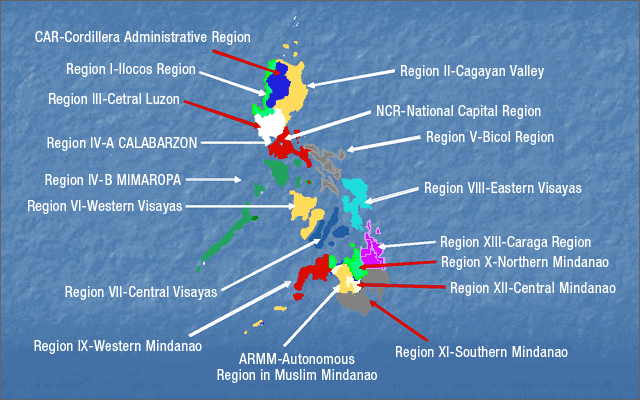
Evolving Federalism by Regions
As such, ordinary Filipinos seeking higher education or better job opportunities are forced to flock to Metropolitan Manila in order to try their luck, unfortunately resulting in the massive population congestion, higher pollution levels, sub-standard living conditions, extreme traffic jams, and high crime rate of Metro Manila. It has also caused the Philippine provinces to have to remit most of their taxes to the capital, and after aggregating the entire amount at the national level, smaller amounts are redistributed back to the local entities, giving them little incentive to develop their own local economies as whatever they produce does not exactly go straight to their own development and instead is mostly remitted back to the capital.
By allowing for evolving region-based decentralization, the different regions in the Philippines will be better empowered to take control of their own economic decision-making, giving them greater incentives to develop their economies, attract their own investors, and create local opportunities that would allow their own people to prosper while staying in their own regions without needing to migrate to the National Capital Region. Empowering the regions this way also respects the cultures, traditions, and languages of the different ethnicities found in the different regions as this devolution of powers will allow the different regions to protect their own local cultural and/or linguistic heritage.
Watch this video [/wpcol_1half]
[wpcol_1half_end id=”” class=”” style=””] [yd_list_posts spec_query=”category_name=Evolving Federalism”]
[/wpcol_1half_end]
Academic Papers & PDFs on Federalism:
The Philosophy and Theories of Federalism
Published in: August 18, 2022
by Gabriel Lanre Adeola (PhD) & Adeleke Olumide Ogunnoiki --- This paper examines the philosophy and theories of federalism from the 17th to the 20th century. For this study, the qualitative method of secondary data collection was adopted. The paper concludes that the philosophy and theories of federalism are tools that assist analysts and readers with the normative and empirical perspectives of federalism, the conditions and preconditions for adopting federalism, the division of power in a federation and the economic functions of the levels of government in a federal state among other things.
Download
The Many Uses of Federalism
Published in: August 18, 2022
by Donald L. Horowitz --- In this article, the aim is to discuss some unexplored frontiers of federalism. By opening a window on comparative federalism and ethnic conflict in severely divided societies, it is possible to show that federalism can often be an aid to the reduction of conflict or to its pursuit in democratic ways. Depending on the configuration of federal institutions, federalism can also foster undemocratic institutions. There are, therefore, two main points to be made: federalism has utility in deeply divided societies, but to realize its many benefits, it is necessary to get the federal design right.
Download
Comparing Federal Systems in the 1990s
Published in: August 18, 2022
by the late Dr. Ronald L. Watts --- In this paper, Professor Watts draws on his unique breadth of knowledge of federal systems. He explores the complexities of federations in advanced industrial nations such as the United States, Switzerland, Australia, Austria, and Germany, multilingual federations such as India and Malaysia, emerging federations such as Belgium and Spain, and federations that have failed such as Czechoslovakia and Pakistan.
Download
The Federal Solution to Ethnic Conflicts
Published in: December 16, 2020
by Baogang He --- Conflicts over ethnic homeland rule, the right to territorial autonomy, and even nation-statehood have been played out in Asia, where it has been debated whether federalism is the best system to reduce or contain ethnic conflicts. The international community has questioned whether the multinational federalism of Spain and Canada offers a successful model for Asia. It has also questioned whether underlying norms such as the right to territorial autonomy, the right to self-determination, and the right to remain unassimilated are universally acceptable.
Download
The Differing Federalisms of Canada and the United States
Published in: June 28, 2020
by Martha A. Field --- There are some remarkable differences in the ways that Canada and the United States have structured their federalisms - differences that teach us not only about the two systems involved but also about the possibilities of federalism generally. The aim of this article is to provide an overview of this subject for the reader who is new to it. It will compare the role of the provinces and the role of the states in the federal schemes of Canada and the United States and will survey three main subjects.
Download
Federalism: the Best Future for Scotland
Published in: June 28, 2020
by the Home Rule & Community Rule Commission of the Scottish Liberal Democrats --- The Home Rule and Community Rule Commission was tasked with setting out proposals
to bring about substantial and stable home rule powers for Scotland. This report does that, and shows how these powers and responsibilities would be best achieved by a move to a federal system across the whole of the United Kingdom. This report builds on the understanding developed by the Steel Commission report and from a century of Liberal and Liberal Democrat campaigning for home rule.
Download
Rationale & Features of Federalism
Published in: June 16, 2020
by Julio Teehankee --- The Philippine archipelago has long been burdened by an overconcentration of political and administrative powers in Manila, which prevents full support and services from benefitting the farthest reaches of the country. Moreover, the unitary state has stunted growth and development in the different regions. There have been several incremental and piecemeal attempts to decentralize the unitary state. Despite the long experimentation with decentralization, Metro Manila, CALABARZON (Region IV-A) and Central Luzon (Region III) account for 62 percent of GDP, while fourteen out of seventeen regions account for only 38 percent.
Download
Federalism (International IDEA Constitution-building Primer)
Published in: June 16, 2020
by Elliot Bulmer --- Federalism is a system of government that establishes a constitutionally specified division of powers between different levels of government. There are usually two main levels: (a) a national, central or federal level; and (b) a state, provincial or regional level. In some cases, however, a federal system may prescribe a three-fold distribution of power by recognizing the constitutional powers of local government (e.g. South Africa) or by creating complex forms of overlapping territorial and linguistic federalism (e.g. Belgium).
Download
The Economic Effects of Federalism & Decentralization: A Cross-Country Assessment
Published in: June 16, 2020
by Stefan Voigt & Lorenz Blume --- This paper is based on the conjecture that institutional details matter and that attempts to estimate the economic effects of federalism by drawing on a simple dummy variable neglect potentially important institutional details. Based on a principal component analysis, seven aspects of both federalism and decentralization are used as variables for explaining differences in (1) fiscal policy, (2) government effectiveness, (3) economic productivity, and (4) happiness. The results show that institutional details do, indeed, matter. Different aspects of federalism impact on the outcome variables in different degrees. This study adds to our knowledge on the transmission mechanisms of federalism and decentralization.
Download
Decentralization and Economic Development: The Philippine Experience
Published in: June 16, 2020
by Milwida M. Guevara --- The Philippines embarked on an ambitious decentralization program in 1991 to strengthen democratic processes and enhance economic growth. The national government devolved major responsibilities and revenues to local governments. Decentralization however goes beyond the transfer of responsibilities and revenues to local governments. Decentralization however goes beyond the transfer of responsibilities and resources to local governments.
Download
Studies in Comparative Federalism: Australia, Canada, the USA, & West Germany
Published in: June 16, 2020
by the Advisory Commission on Intergovernmental Relations (1981) --- In the State and Local Fiscal Assistance Amendments of 1976 (P.L. 94-488), Congress asked the Advisory Commission on Intergovernmental Relations to study and evaluate "the allocation and coordination of taxing and spending authority between levels of government, including a comparison of other federal government systems." The objective of this research is to determine how federal systems in other industrialized nations have dealt with some of the issues of fiscal federalism that are of current concern in the United States.
Download
Constitutional Design: Options for Decentralizing Power
Published in: June 15, 2020
by Cheryl Saunders --- The functions of government that a state performs can be decentralized in various ways and to varying degrees. This Paper is divided into 3 parts, which together are intended to guide the reader in understanding the key building blocks involved in building a decentralized state and identifying the key design issues involved. The paper identifies 3 common models of decentralisation, using country case studies to explain the key design features of each model.
Download
Federalism, Decentralisation, and Corruption
Published in: June 13, 2020
by Sebastian Freille, Mohammed Emran ul Haque, & Richard Anthony Kneller --- We investigate the empirical relationship between decentralisation and corruption. Using a newly assembled dataset containing data for up to 174 countries, we revisit the empirical evidence and seek to explain some of the inconsistent results that exist in the literature. We find that not only results differ due to the use of different specifications and data but more importantly because previous research overlooks the relationship between different dimensions of decentralisation.
Download
The People's Draft: Executive Summary
Published in: June 13, 2020
The People’s Draft is a crowd-sourced constitution framed in 2018 at the initiative of Tanggulang Demokrasya (Tan Dem), Inc.ii and PUBLiCUS Asia, Inc. The main features of the Peoples’ Draft are as follows: (1) “Foreign investment liberalization” (for massive job creation and consumer price reduction); (2) “Collective rule” by a unicameral parliament and the local councils (for platform-based party politics, instead of personality-based politics); (3) “Regional decentralization” via the “bottom-up” approach, instead of the “top-down” approach (to empower the people of the regions).
Download
Problems of Democracy in Ethnically-Divided South Asian Countries
Published in: June 13, 2020
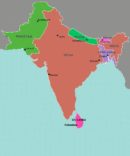
by Tatu Vanhanen --- Ethnic heterogeneity characterizes all South Asian countries. Their populations are divided by language, religion, caste, race, and/or tribe into various groups, which are tended to compete and clash with each other. Consequently, ethnic conflicts in one form or other have been common in all these countries, and it has been difficult to maintain domestic peace.
Download
Democratic Deficits in the Philippines: What is to be Done?
Published in: June 13, 2020
by Clarita Carlos & Dennis Lalata with Dianne Despi & Portia Carlos --- There is no doubt that the importance of a good person, with the right intentions and with character, imbued in the highest office of the country, cannot be overestimated. With the extraordinary powers the 1987 Philippine Constitution bestowed upon the President, he will be able to change things and move the country forward – even with the limitation of only one six-year term in office. However, the example of the Ramos Administration in the ninetees, during which democracy seemed to have stabilized and a fresh wind of socioeconomic development pushed the country for some years into the mainstream of the booming SoutheastAsian region bears remembering how the country can fall back into political turmoil and socio-economic deadlock after a change of administration.
Download
Political Institutions & Corruption: The Role of Unitarism & Parliamentarism
Published in: July 2, 2015
by John Gerring & Strom Thacker --- The CoRRECT™ Movement agrees with this paper in their finding that corruption tends to be lower in countries that use parliamentary systems, which is consistent with the findings of Loayza, Lederman, & Soares (2001). However, we disagree with Gerring & Thacker's finding that Federalism worsens corruption as this is conflated with bicameralism, which their paper claims worsens corruption levels. This is because all federalist countries but one (Fed. States of Micronesia) are bicameral. It also contradicts Loayza, Lederman, & Soares' finding that decentralization (of which Federalism is one type) improves accountability & lessens corruption.
Download
Accountability & Corruption: Political Institutions Matter
Published in: July 2, 2015
by Norman Loayza, Daniel Lederman, & Rodrigo Soares --- This study uses a cross-country panel to examine the determinants of corruption, paying particular attention to political institutions that increase accountability. Even though the theoretical literature has stressed the importance of political institutions in determining corruption, the empirical literature is relatively scarce. Our results confirm the role of political institutions in determining the prevalence of corruption. Democracies, parliamentary systems, political stability, and freedom of press are all associated with lower corruption
Download
Full Playlist of Federalism Lecture:
VIDEO Individual Modules of the Federalism Lecture: [origincode_videogallery id=”10″]
Forum of Federations Basic Lectures: [origincode_videogallery id=”12″]
Ashutosh Varshney Lectures on Ethnic Conflict: [origincode_videogallery id=”13″]














 I believe: This is a CoRRECT™ Video with a very positive message
 Walang Natira: Gloc-9's MTV Rap about the OFW Phenomenon