Charter Change for Democracy and Good Governance: The Game-Changing Leadership of Congress
President of Kalayaan College & Director of its
Institute for a Federal Republic with a Parliamentary
Government, and U.P. Professor Emeritus of Public
Administration and Political Science
*
The State of Our Nation and Democracy. It’s been 25 years after the restoration of democracy at EDSA, and the promise of “building a just and humane society” and the establishment of “a democratic and republican State” under our 1987 Constitution. What have we achieved? What must we do?
We have to build up our still weak and divided nation, to rebuild our failing democracy in our people’s judgment. Our unconsolidated and unstable democracy is at risk of reverting to an authoritarian system when fewer and fewer citizens believe that democracy is superior to some kind of authoritarian rule.
In 2005 Freedom House downgraded the Philippines from “Free” to “Partly Free,” and in 2008 we were no longer regarded as “an electoral democracy.” Our endangered State shows some signs of a “failing State” according to the international surveys of Foreign Policy and The Fund for Peace. In 2010 The Global Index for Peace ranked the Philippines as the 19th most violent and killing among 140 countries surveyed.
All along our leaders have blocked Charter change to redesign and reform our dysfunctional political system. This was partly because of their distrust of the advocates of constitutional reform, but also because some of them benefit from the faulty system at the expense of our people who remain poor, vulnerable, and powerless.
But times may be changing. The Senate is showing keen interest in Charter change. The House continues to push for it. It would be good to persuade our popular President on the vital urgency of structural and institutional reforms because he enjoys the people’s trust and is above suspicion if he supports the revision of the “Cory Constitution.” Overall, determined congressional leadership is crucial and will be game-changing.
Strengths and Weaknesses of Our 1987 Constitution. Our Constitution’s best features are its elaborate specification of its vision of a “just and humane society,” of its ideals and principles of constitutional democracy, and of human rights and social and economic reform beyond civil liberties and political freedom. Otherwise, it is a conservative Constitution in the design of our political and governmental institutions. It has basically restored our old presidential system and highly centralized unitary system with most of their imperfections. It is reactive more than proactive in a world that is becoming more challenging and less predictable in its transformation.
What major changes in the Constitution are proposed? Among the most important are:
(1) the replacement of our traditional presidential government with a parliamentary government that most countries have, which will also reform our electoral and political party systems;
(2) the devolution of certain governmental powers from the national level to the regional and local levels;
(3) reforms in the judiciary;
(4) reform of our constitutional commissions;
(5) the liberalization of constitutional policies on foreign investments, or delegating such policies to the legislature; and
(6) a Bill of Duties to balance the Bill of Rights. Time allows me to discuss only the first one although I include the second in my text.
Why change our Presidential Government to a Parliamentary Government?
1. In a Parliamentary Government, also known as “Party Government,” Members of Parliament (MP’s) shall be elected as registered members of particular political parties and shall be committed by law and practice to their party’s ideals and program of government. Voters shall vote for an individual candidate for MP in the parliamentary district and for the political party that the candidate represents.
2. If Parliament is unicameral, MPs are only elected in parliamentary districts like our present congressional districts. If bicameral, Senators are also to be elected by regions to represent regional interests but not to govern.
3. Parliament shall have as many members as may be provided by law. To begin, the Parliament shall have as many elected members as the present congressional district representatives. The present Party-List representation shall be phased out.
4. Additional MPs shall be chosen by Proportional Representation (PR) of their political parties-on the basis of the respective share of the political parties in the total votes cast in the parliamentary elections; and they shall constitute thirty percent of the enlarged total membership of Parliament.
5. “Checks and balance” in Parliament are exercised in the relations between the majority party and the opposition parties, including their participation in the regular “Question Hour.” Outside of Parliament there are other centers of countervailing power to the Government: the business groups, the interest groups, the media, and civil society organizations.
6. Members of Parliament shall be elected, or chosen by the political parties, for a term of five years, with no term limits. The Government remains in power as long as it enjoys the support of the majority of the MPs and is not defeated in a “vote of no confidence” in Parliament.
7. The Prime Minister, who is the leader of the ruling political party, or coalition of political parties shall be elected by a majority of all the MPs. He exercises the executive power as the Head of Government with the Cabinet of Ministers. Three-fourths of the Ministers shall be MPs.
8. From among the MPs, the Parliament shall elect the President who is the Head of State for a term of five years. Upon his election the President shall cease to be an MP and a member of any political party.
What are the advantages of Parliamentary Government over our Presidential Government?
1. Because Parliament exercises both legislative power and executive power, it will better ensure the coordinated making of laws and policies and their efficient and effective implementation. Unlike in our Presidential Government with its built-in conflict and excessive checks and balance among the President, the Senate, and the House of Representatives that are separate, co-equal, and rival institutions.
2. The Prime Minister and the Government (the Cabinet of Ministers and governing party headed by the Prime Minister) assume collective responsibility and collective accountability for governance to the Parliament and the people. At any time the people will know which political party to reward for good governance and administration, or to punish for failure and corruption.
In our fragmented Presidential Government, neither the President, the Senate, or the House of Representatives is accountable to the people as institutions. The people cannot hold the President accountable because he has a fixed term of six years with no reelection. He may be removed only by impeachment, which is virtually impossible to do. Failure of impeachment invites extra-constitutional “people power” and military intervention to remove him, resulting in political instability, as we have learned.
3. Parliamentary Government is more likely to ensure the election of the Head of Government-the Prime Minister-for his leadership and experience in the party and the public service.
Unlike in our Presidential System, the President as Head of Government and Head of State is elected on the basis largely of personal popularity or “win-ability,” not on proven competence and experience as a party and political leader. Under our 1987 Constitution none of our four presidents won by obtaining a majority of the votes, not even Joseph Estrada or Noynoy Aquino.
4. In a Parliamentary Government it will be easier to change the Head of Government and the ruling party whenever it becomes necessary, by a vote of “no confidence” in Parliament. Consequently, Parliament is dissolved and a new election of the MPs takes place.
Yet the system ensures political stability. No need for impeachment, people power revolts, and military intervention that cause political instability, disrupt the economy, discourage foreign investors, and hurt the people, especially the poor.
5. Unlike in our Presidential Government where the President is both Head of Government and Head of State, the function of Head of State in a Parliamentary Government is assigned to a ceremonial President elected by Parliament. This will lighten the burden on the Prime Minister who can concentrate on governance.
6. At the same time the President, who symbolizes the people’s sovereignty and national unity, can be a rallying point as a leader who is above partisan politics.
7. Parliamentary Government and electoral reform will empower the people to choose not only the candidates for Parliament but also the political party they want to govern the country and the regional and local governments.
8. In time Parliamentary Government will develop a two-party system and political parties that are democratic, disciplined, united, and effective in making and carrying out a program of government that can secure popular support. Political parties shall be supported by the State, the two leading political parties more than the others.
Unlike in our Presidential Government where our political parties are organizations of politicians who are oriented more to personalities and patronage than to policy and program of government. Our political parties do not have mass membership, and they are weak, opportunistic, undemocratic, and unaccountable.
9. Parliamentary elections by districts will cost much less than nationwide presidential and senatorial elections that require huge sums of money for campaigning and thus corrupt the political system. It will be easier, faster, and less expensive to manage parliamentary elections.
10. The selection of additional members of Parliament through “Proportional Representation” of the political parties will enable the leading political party to select other competent leaders to serve in Parliament and the Cabinet.
These are professionals, business leaders, scholars, and representatives of various sectors of society who can serve in Parliament and the Cabinet, although they are not willing to run for member of Parliament.
11. Parliamentary Government can lead to more continuity in policy and administration if the majority party or coalition governs well and the people are satisfied, because the people will learn to reward or punish the ruling party for its success or failure in governance. The people will know that the ruling party, not just individual leaders, are the ones responsible and accountable for the government’s performance.
12. As shown, a shift to Parliamentary Government also results in a major reform or our electoral system and political party system.
Most countries in the world have a parliamentary government. These include the more progressive ones like Germany, Japan, Canada, Australia, United Kingdom, Norway, Sweden, and also India, Singapore, and Malaysia in Asia.
13. Parliamentary government will eventually help us to have a functional democracy and good governance: ang mabisang demokrasya at mabuting pamamalakad ng ating gobyerno at bayan.
14. Charter change to a parliamentary government, along with decentralization and devolution of powers to the regional and local governments, and maybe eventually a Federal Republic, will enable us to respond more efficiently and effectively to our problems, meet our challenges and achieve our goals as a nation, and compete more effectively in the global economy.
15. Charter change to a parliamentary government and a decentralized structure will help us to mobilize and sustain “people power” in national, regional and local governance and development and reduce poverty and corruption.
16. A parliamentary and decentralized State will empower us, citizens, to achieve the peace, prosperity, justice and security we have all been wanting for ourselves and our children.
17. Moreover, with less restrictions on foreign investments and participation, the Government will be better able to help in attracting these investments that will create more jobs, raise incomes, provide better education, health, welfare, and security to our people.
18. And we can build and maintain more schools, hospitals, waterworks, roads, bridges, seaports, airports, and other infrastructure.
19. With a great deal of political will, hard work and sacrifice we, Filipinos, can build a nation worthy of our heroes, a country fit for our children-of which we can all be really proud.
Why devolve governmental powers from the national government to the regional and local governments? What is proposed is to change our traditional, highly centralized unitary structure of government to a decentralized and devolved structure composed of autonomous local governments and regions, that could lead to establishing the Federal Republic if and when this becomes feasible.
Regional and Local Self-Determination. In revising the 1987 Constitution, a participatory process is proposed for extending substantial regional and local autonomy that could lead to a future Federal Republic. In an act of regional self-determination, the legislative bodies in contiguous provinces that share common linguistic, cultural and historical features may petition the Congress or Parliament to form them into an autonomous region through an organic act.
By constitutional mandate through a revision of the 1987 Constitution, the organic act of the autonomous territories/regions to be passed by Congress, or the new Parliament, shall provide for primary legislative powers of their regional assemblies over the following: (1) administrative organization, planning, budget, and management; (2) creation of sources of revenues and finance; (3) agriculture and fisheries; (4) natural resources, energy, environment, indigenous appropriate technologies and inventions; (5) trade, industry and tourism; (6) labor and employment; (7) public works, transportation, except railways, shipping and aviation; (8) health and social welfare; (9) education and the development of language, culture and the arts as part of the cultural heritage; science and technology; (10) ancestral domain and natural resources; (11) housing, land use and development; (12) urban and rural planning and development; (13) such other matters as may be authorized by law for the promotion of the general welfare of the people of the autonomous territory.
The organic act will be subject to approval in a plebiscite in the territory or region concerned. [Optional development. When 60 percent of the provinces and cities become autonomous territories/regions they shall become Federal States of the Federal Republic to be established. As an alternative, after a transition period of say, 10 years, from the revision of the Constitution, all autonomous territories and regions shall become Federal States in the Federal Republic.]
A restructuring of the entire tax system will re-allocate the tax bases for regional and local government taxes.
Expected advantages of regional and local autonomy and a future Federal Republic.
1. A devolved Unitary System will build a just and enduring framework for peace through unity in our ethnic, religious, and cultural diversity, especially in relation to Bangsa Moro and our lumad/indigenous peoples everywhere.
Responsive regionalism will accommodate the legitimate interests of the Moros, help end the war in Mindanao, and discourage secessionism.
2. The devolved Unitary System and possible federalism will empower the citizens through their participation in the affairs of their autonomous local and regional governments. As the people become more involved in government decisions, they will raise their political awareness and learn to demand better performance and public accountability. Their participation and efficacy in elections and the making of government decisions will enhance the quality of governance. Better policies and implementation will enable the people to raise their standard of living. At the same time they will be more willing to pay taxes that will finance government programs and services for their direct benefit.
3. The creation of autonomous territories and autonomous regions [that may become federal states in a Federal Republic] will improve governance by challenging and energizing local and regional leaders, entrepreneurs, and citizens around the country. It will release them from the costly, time-consuming, stifling, and demoralizing effects of excessive central government controls and regulation in our traditional unitary system.
4. Autonomous regions and territories will specifically strengthen the powers of the regional, provincial, city and municipal government leaders. It will be proposed that the organic acts of the Parliament will make key local government executives-governors and mayors of the capital cities-members of the assembly of the autonomous regions and territories of the Republic.
5. Autonomous regions and local governments, together with Parliamentary Government, will improve governance by promoting the development of strong, united, disciplined, and program-oriented political parties that are responsible and accountable to the people for their conduct and performance in and out of power.
6. Autonomous regions and local governments will promote equitable regional and development by supporting the less endowed and developed regions and the poor and the needy across the land.
7. Thus, regional and local autonomy will stimulate and hasten the country’s political, economic, social, and cultural development and modernization. There will be inter-regional competition in attracting domestic and foreign investments and industries, professionals and skilled workers.
8. The use of the major regional languages as official language and in elementary education will enhance democratization and popular participation in governance. A renaissance of regional languages and cultures will enrich the national language and culture and broaden and deepen our democracy.
*****
In other words-with political will and sustained effort for the common good-regional and local autonomy and a Parliamentary Government and other political and economic reforms will gradually broaden and deepen Filipino democracy: gradually enabling it to deliver on the constitutional promise of democracy, human rights, a better life for all, a just and humane society, and responsible and accountable political leadership and governance.
Madame Chair, Honorable Senators, thank you for this great opportunity of sharing some ideas for urgent constitutional reforms based on my work as a scholar and reform advocate over 40 years. In our sad state of the nation and threatened democracy, your leadership of Charter change can be game-changing.

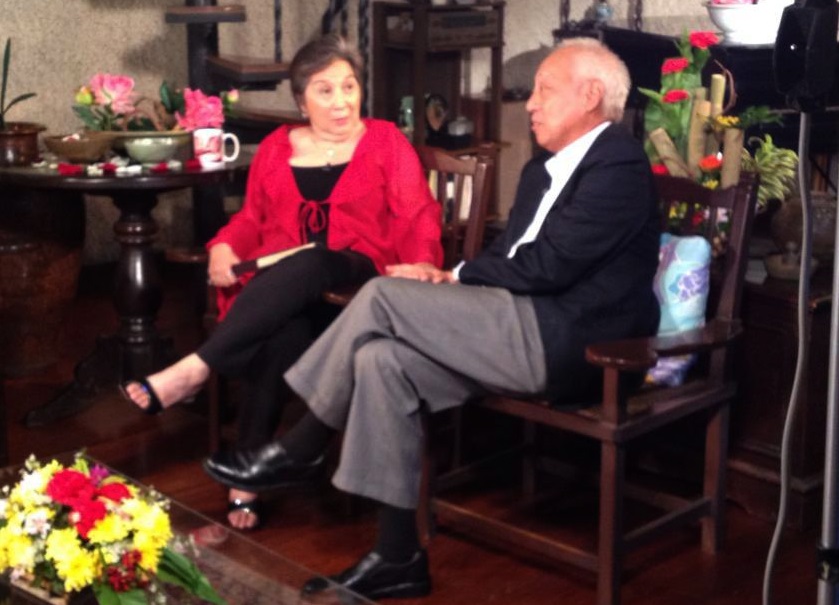
 I believe: This is a CoRRECT™ Video with a very positive message
 Walang Natira: Gloc-9's MTV Rap about the OFW Phenomenon